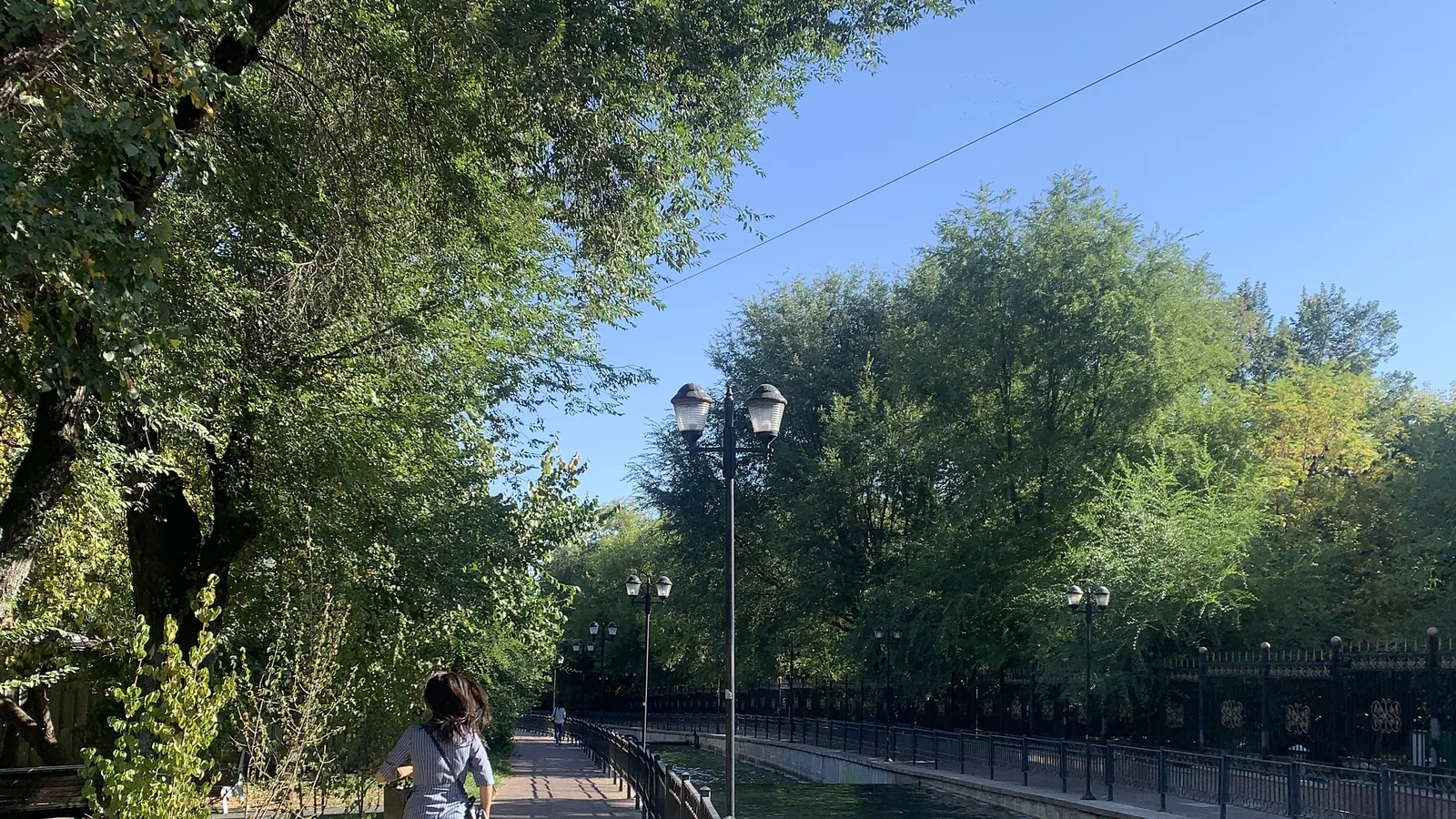
We live in Almaty, and these are the questions people ask before coming here: nights out, taxis, women traveling alone, theft, earthquakes, language and money. In our experience, Almaty is a fairly safe, normal big city. There are things to watch, and we’ll go through them.
If you’d rather read official travel advice than ours, it’s collected in one section near the end, with dates.
Is Almaty safe for tourists?
In our experience, Almaty is a fairly safe, normal big city. The things to watch are nights around bars and clubs, cars you didn’t order through an app, and pickpockets in crowds. The UK advice puts it plainly: “No travel can be guaranteed safe.”
In our experience, visitors of any background are seen simply as tourists. That applies whether they come from India, the US or anywhere else.
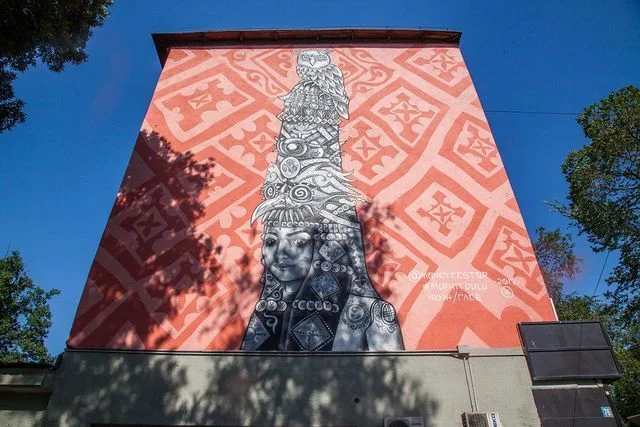
Some people picture Kazakhstan as steppe and small villages. The steppe exists, but Almaty is a large city. It is the former capital and still the country’s cultural capital. Films are shot here, there’s street art, and a lot of creative people live and work here. Astana, the administrative capital, is quieter. Cities in the west of the country feel less comfortable, though not dramatically so.
For what to see once you’re here, see our guide to things to do in Almaty.
Is it safe to walk at night?
There are no no-go neighborhoods. There are places where we wouldn’t walk alone late at night, mostly because they’re dark. Street lighting thins out in the evening, and a quiet street feels less safe than it does at noon. If you walk alone at night, someone might rob you. In our experience that doesn’t happen often, and it’s no reason to stay in your hotel. Take more care around bars and clubs.
The UK advice is blunter. It mentions violent thefts in expatriate communities in Almaty and Astana, mainly at night in and around bars and clubs or on the way home late. It also says robberies are uncommon but do happen. It warns that drink spiking is a risk in nightclubs and bars. Canada says: “There have been incidents involving tourists outside of bars and nightclubs, especially at night, in Almaty, Astana and Atyrau.”
Tip: before a night out, plan how you’ll get home. Stay with your friends, keep your drink where you can see it, and take a taxi you ordered through an app if it’s late. In our experience, public transport runs until late in the evening, but after a night at a bar we’d take the app taxi.
Can I just take a taxi?
Yes, as long as you ordered it yourself through an app. Don’t get into a car that stops on the street or a driver who comes up and offers you a ride. The UK advice says the same: “Do not use unofficial taxis or a taxi already occupied by a passenger.”
Our guides use Yandex Go. You see the car, the plate number and the driver before you get in, and the fare is set in the app. Check that the plate matches before you open the door.
At the airport, travel guides report drivers offering rides in the arrivals hall. We found no official source on this and give no figures. Ordering a car through the app avoids that conversation.
Is it OK for a woman to travel alone?
In our experience, unwanted attention does happen: comments and pickup lines. It isn’t a given, and it may not happen at all. Gender roles here are still fairly traditional. A woman on her own can feel fine here.
Canada’s advice says the same in one line: “Women travelling alone may be subject to some forms of harassment and verbal abuse.”
Tip: the practical advice is the same as for anyone at night, and it comes from the UK guidance. Take an app taxi late at night, don’t leave your drink unattended, and don’t go off with people you’ve just met.
What about pickpockets and markets?
We’ll give you both sides here, because they don’t match. We haven’t run into pickpocketing ourselves. The UK advice calls pickpocketing “very common in crowded places such as markets and on public transport.” Canada says petty crime, including pickpocketing, “occurs, particularly in Astana and Almaty.” It also says pickpockets are common on public transport, which is often overcrowded. We’d rather you take the official warning seriously than rely on our luck.
What we do see: at a bazaar, a vendor may quote a foreigner a higher price.
Tip: ask the price before you pick something up, and keep your bag zipped in crowds. In a café, we’d leave a laptop on the table for a minute, but not for long.
Is it a conservative place? What should I wear?
Almaty is a big secular city. Many people dress in revealing or bold clothes, and that’s normal here. Kazakhstan has a large Muslim population. In our experience, religion is far less visible in Almaty than in, for example, Turkey.
Tip: dress more modestly when you visit a mosque or another religious site. Elsewhere in the city, wear what you’d wear at home.
What about the 2022 protests?
In January 2022, Almaty saw serious protests. We’d put it this way: this can happen anywhere, and it isn’t what daily life here looks like.
Tip: in Kazakhstan, public demonstrations need permission in advance. The UK advice warns that taking part in an unauthorized gathering can lead to arrest. If you see a crowd gathering, it’s best not to join in.
Earthquakes, mudslides and mountains: should I worry?
These are real factors, and we won’t play them down. Almaty sits in an active seismic zone. As reported in local media, seismic maps rate parts of the city at 8 to 10 points on the intensity scale. New buildings have to be designed with earthquakes in mind. Older housing is more mixed: inspections over the years have found buildings that don’t meet the standard.
Mudflows are the other mountain risk for the city. The Medeu dam, built in the Soviet era to stop mudflows (not earthquakes), took the full force of a large mudflow in July 1973, and the city was spared. It stands over 100 meters high.
The mountains themselves need more care than the city. The UK advice says: “There is a high risk of avalanches, landslides and rockfalls.” Weather changes fast, and mobile signal in remote places is weak or absent. Almaty’s round-the-clock rescue services are in the Shymbulak gorge and at Big Almaty Lake.
Tip: in March and April, check the avalanche bulletin on Telegram before any trip into the mountains. In winter, go with a guide if you don’t have mountain experience. Winter also brings smog to the city, worst from December to February. Our winter guide covers air quality, and our spring guide covers trail conditions.
What about the police?
We haven’t heard of police bothering tourists in the city. If you rent a car, you may be stopped on the road, though it’s not a given.
Tip: carry your original passport. The UK advice is clear that “copies are not acceptable,” and patrol officers may ask for ID.
Does anyone speak English?
Not many people. The city runs on Russian and Kazakh, and most people speak both. Kazakh is the official language. Few people speak English, so keep a translation app on your phone. Mobile internet works, so the app will be there when you need it.
Cards or cash?
Cafés and regular shops usually take cards. Markets and tourist spots outside the city often don’t, so carry cash when you leave town. Public transport barely reaches the mountain spots either, so most trips out of the city need a car, a taxi or a tour.
Tip: the UK advice warns that “fraudsters can steal your card details without you noticing” and suggests using ATMs inside banks where possible.
Can I drink the tap water?
It’s not a health emergency, but we don’t drink it from the tap. Boil it or buy bottled water. We’d say the pipes are old, and that’s reason enough for us.
If you’d rather not take our word for it
Each country writes its advice for its own citizens, and it covers Kazakhstan as a whole. We checked these pages on October 15, 2026; the US and Australian pages did not open, see below.
- UK (gov.uk), updated October 13, 2026: “No travel can be guaranteed safe.” The advice names violent thefts at night around bars and clubs, drink spiking, and pickpocketing in markets and on public transport. It also covers unofficial taxis, card fraud, avalanches and rockfalls, carrying your original passport, and the active seismic zone.
- US (travel.state.gov): The US State Department lists Kazakhstan at Level 1, “exercise normal precautions,” in an advisory dated August 18, 2026, as reported by The Astana Times. We could not open the State Department page itself.
- Australia (smartraveller.gov.au): Australia’s Smartraveller advice, updated September 11, 2026, says “exercise normal safety precautions,” according to the search summary. It mentions reports of crimes against foreigners, including drink spiking, and reports of thieves in Almaty bars and nightclubs. We could not open the page itself.
- Canada (travel.gc.ca), updated October 15, 2026: “Take normal security precautions,” the lowest of its levels.
- India (Embassy of India), page updated October 14, 2026: the page covers disrupted flights, not safety on the ground. For your dates, ask your airline. Contacts as listed on the embassy pages on October 15, 2026: Astana +7 701 220 7606 (WhatsApp), Almaty +7 771 657 8751 (WhatsApp), cons.astana@mea.gov.in, cons.almaty@mea.gov.in. The embassy’s Contact Us page gives a different Almaty emergency number, +7 705 754 8329. Check the page before you travel.
- Almaty police said serious crimes fell 3.3% in the first seven months of 2026 compared with a year earlier. That is a change, not a count.
We did not find official statistics on crimes against foreign visitors in Almaty. The advisories we read describe risks for all visitors; we found none that treats travelers of a particular nationality differently. We found no verified figures on card fraud in Almaty.
Entry rules and consular help depend on your passport; the safety advice we read does not.
Who do I call if something goes wrong?
Emergency numbers in Kazakhstan:
- 112: emergency and rescue
- 102: police
- 103: ambulance
- 101: fire
We are a tour company, not an emergency service. If something happens, call these numbers first, then your embassy.
Keep with you: your original passport, your insurance details, and your embassy’s contact number.